

Why I keep coming back to the importance of touch and holistic massage therapy
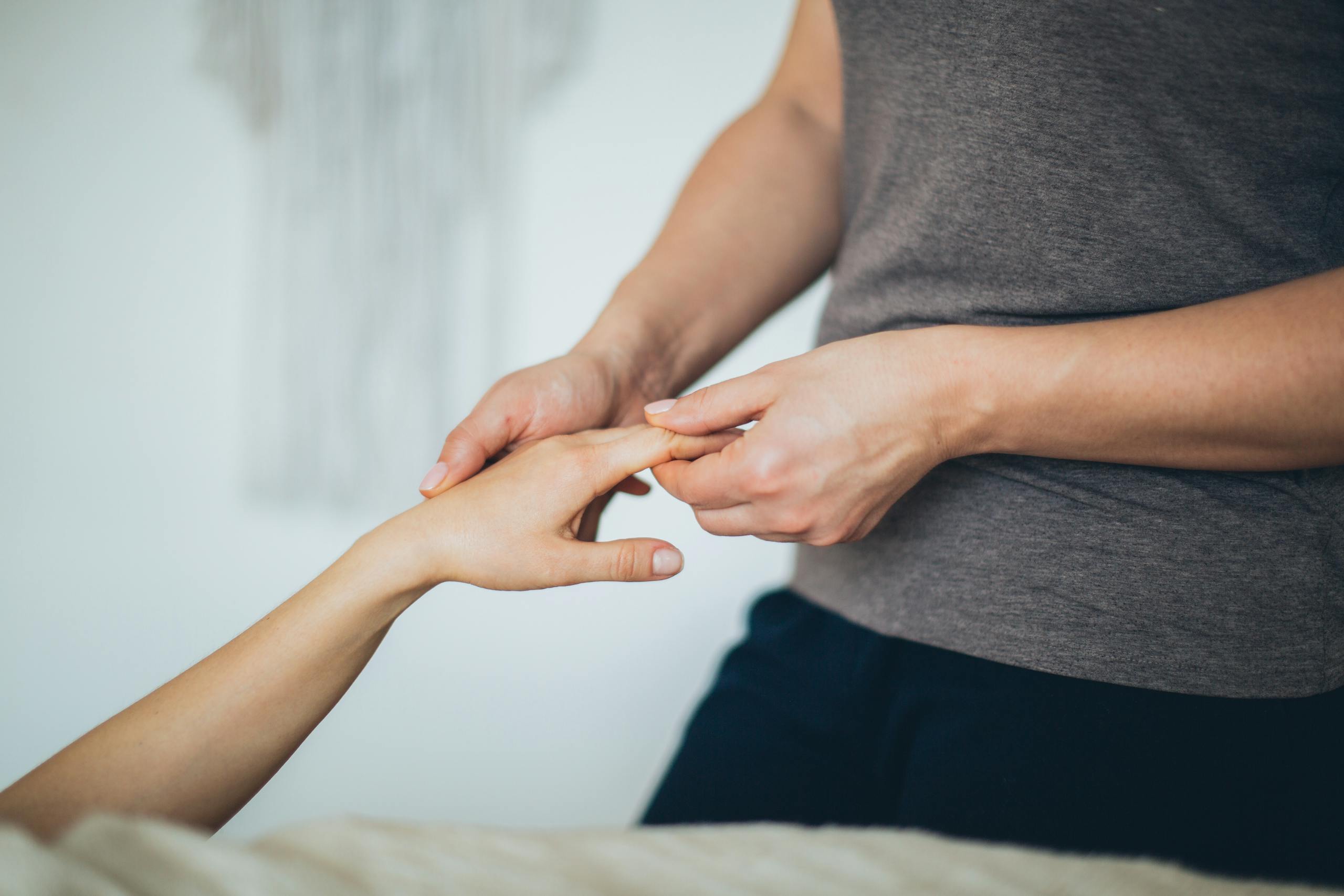
In my work as a holistic massage therapist in Cornwall, I often see women who are holding a lot. They are capable, thoughtful, used to getting on with things. But when they lie down on the couch, there is often a moment where the body doesn’t quite know how to stop. I recognise it because I’ve experienced it too. That feeling of being constantly in your head, moving from one thing to the next, with very little time spent actually noticing how your body feels. This is where human touch, touch therapy and wellbeing start to matter in a different way.
Not as a luxury, but as something the body has been quietly missing.
What I notice happens when the body begins to feel safe
One of the most consistent things I observe during holistic massage therapy is how quickly the body responds to slow, attentive touch.
Not always dramatically. Sometimes it is subtle.
A deeper breath. A shoulder dropping slightly. The jaw softening.
There is a shift from holding to allowing.
We now understand that touch therapy for stress relief acts as a signal of safety to the nervous system. It helps move the body out of that constant low-level alertness and into a state where it can rest and restore.
But in practice, it simply feels like coming back to yourself.
Why so many of us feel slightly disconnected
I don’t think this is surprising when you look at how we live.
So much of daily life happens in the mind. Planning, organising, responding. Even rest can become something we try to do “well”.
At the same time, many of the women I work with are the ones giving care, not receiving it.
Over time, that can lead to a kind of quiet disconnection from the body. I often hear things like:
“I didn’t realise how tense I was until I lay down”
“I find it hard to switch off, even when I’m tired”
This is often linked to touch deprivation in adults, sometimes called skin hunger. Not in an extreme way, but as something that has simply been missing for a while.
What is happening beneath the surface?
Although I don’t talk about it in technical terms during a treatment, there is a lot happening in the background.
Gentle, steady touch supports nervous system regulation through massage. It can lower stress hormones like cortisol, while encouraging the release of oxytocin, linked to feelings of trust and ease.
There are even specific nerve fibres in the skin that respond to slow, soothing touch, and seem to exist purely to create a sense of wellbeing.
This is why massage for anxiety and stress can feel so effective without needing to be forceful.
What matters more than the science, though, is how it feels.
Most people notice a sense of quiet, or a feeling of being more settled in themselves.
Why holistic massage therapy can feel different from everyday life
Touch in daily life is often brief or distracted.
Massage is different because of the quality of attention.
There is time for the body to soften gradually, rather than being asked to relax on command. Nothing is rushed, and nothing is forced.
I work slowly for this reason. Not to “fix” anything, but to give the body space to respond in its own way.
This is a key part of being a holistic massage therapist in Cornwall, providing deep relaxation, especially for women who are used to being in a constant state of doing.
Often, that is when deeper tension begins to release.
A different way of thinking about self care
For a long time, I thought of self care as something I had to fit in or get right.
Now, I see it more as creating the conditions where the body can settle.
Sometimes that is rest. Sometimes it is time outside. And sometimes it is simply being in a space where you don’t have to do anything at all.
Holistic self care for busy women is not about doing more. It is about allowing more space.
Holistic massage therapy and touch therapy can be part of that. Not as an indulgence, but as a way of supporting your system in a very natural, very human way.
A gentle invitation
If you recognise yourself in this, it may be worth exploring what it feels like to receive, rather than give.
Whether that is through small moments of connection in daily life, or booking a holistic massage therapist in Cornwall, the body often responds more quickly than we expect when it is given the chance.
References
https://www.ncbi.nlm.nih.gov/pmc/articles/PMC6169872/
https://www.frontiersin.org/articles/10.3389/fpsyg.2017.00376/full
https://www.ncbi.nlm.nih.gov/pmc/articles/PMC2719545/
https://www.ncbi.nlm.nih.gov/pmc/articles/PMC2864904/
https://www.ncbi.nlm.nih.gov/pmc/articles/PMC5913440/
https://www.psychologytoday.com/gb/blog/hide-and-seek/201606/touch-hunger